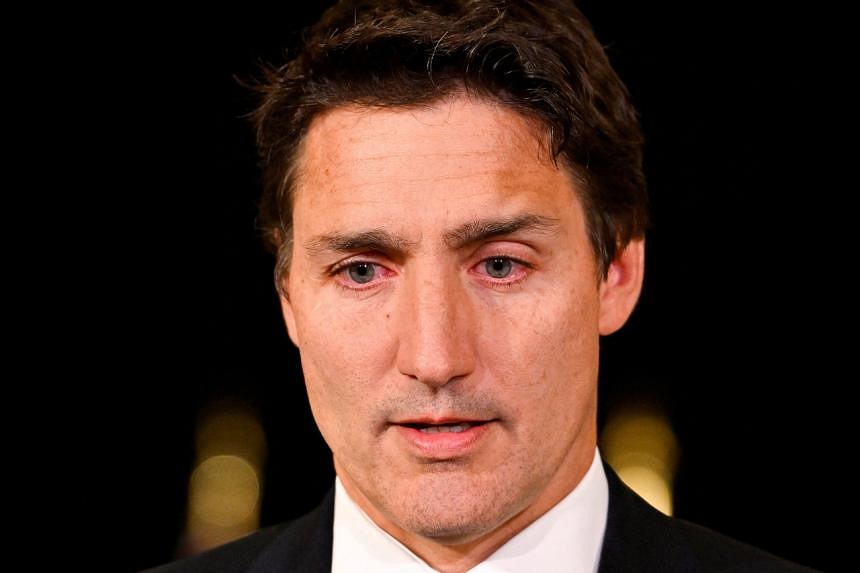
- What is the “Trudeau no confidence motion passes before April?” market asking?
- It asks whether the following will happen: Trudeau no confidence motion passes before April? Traders buy Yes shares if they think it will and No shares if they think it will not.
- What do the Yes and No prices mean?
- At the last observation Yes traded at 0.0¢ and No at 100.0¢. A Yes share pays $1 if the market resolves Yes, so its price is the market's implied probability: 0.0% for Yes and 100.0% for No. The two prices add up to about one dollar.
- How did this market resolve?
- It resolved No on 14 Mar 2025. Trading has stopped; the record of prices, holders and trades stays on this page.
- How does this market resolve?
- This market will resolve to "Yes" if a motion of no confidence passes in the Canadian House of Commons while Justin Trudeau is serving as prime minister between December 15, 2024, and March 31, 2025 ET. Otherwise, this market will resolve to "No". Motions of no confidence that are voted on but do not pass the House of Commons will not count toward the resolution of this market. If Justin Trudeau ceases to be Prime Minister of Canada for any length of time prior to a motion of no confidence passing, this market will resolve to "No". The primary resolution source for this market will be…
- What is the difference between volume, liquidity and open interest?
- Volume is the dollar value of shares traded in a period, liquidity is the dollar value resting in the order book ready to be traded against, and open interest is the value of all shares currently held. Volume measures activity, liquidity measures how easily you can trade, and open interest measures how much is at stake.